
Find Your Local Hometown Home Page News & Weather
Click on a town to view local news, info, webcams, weather & local waterway info.California
California State Weather MapHuntington Beach
Florida
Florida Weather NOAA Radar Map
Fort Lauderdale
Fort Myers
Fort Pierce
Hobe Sound / Jupiter Island
Indiantown
Jensen Beach
Juno Beach
Jupiter / Tequesta
Kendall
Martin County
Miami
Naples
North Palm Beach
Ocala
Okeechobee
Palm Beach County
Palm Beach Gardens
Palm City
Port St. Lucie
Port Salerno
Sebastian
Sewall's Point
Stuart
Treasure Coast
Vero Beach
West Palm Beach
Illinois
Illinois State Weather MapChicago
Kentucky
Kentucky State Weather MapLexington
Maryland
Maryland State Weather MapEllicott City
New Jersey
New Jersey State Weather MapHigh Bridge
New York
New York State Weather MapBuffalo
Niagara Falls
Syosset
Webster
North Carolina
North Carolina State Weather MapCharlotte
Pennsylvania
Pennsylvania State Weather MapPhiladelphia
South Carolina
South Carolina State Weather MapColumbia
Tennessee
Tennessee State Weather MapMonterey
Texas
Texas State Weather MapDallas



-
Miss.: Trump delivers address at Crossroads Arena in Corinth, bolstering Sen. Hyde-Smith in her reelection campaign
 by Brooke Mallory on October 27, 2026 at 1:45 am
 -
Steve Hilton pumps $3 gas on ‘Califordable’ tour, swipes at gubernatorial opponent who hasn’t been seen for weeks: ‘Where’s Becerra?’
by Sophia Flores on October 27, 2026 at 1:32 am
-
DOJ charges fmr FBI Director James Comey for a third time over alleged sensitive material leak
by Lillian Mann on October 26, 2026 at 10:42 pm
-
DOJ announces charges against 48 noncitizens for election-related crimes, including voting in elections from 2020 to 2026
by Addie Davis on October 26, 2026 at 9:54 pm
-
Trump offers $1M reward for voter fraud tips leading to arrest and conviction
by Addie Davis on October 26, 2026 at 9:45 pm
-
Exiled Venezuelan opposition leader returns to country following Maduro’s abduction by U.S. forces
by Lillian Mann on October 26, 2026 at 9:38 pm
-
Famously Undiplomatic Britt McHenry Banished From Ballgame, State Department

Britt McHenry fucked up again. The scandal-magnet sports reporter lost her brand-new government gig after throwing a tantrum and a drink at a basketball game. Seems like only yesterday that Defector was reporting that the former Fox News and ESPN personality was boasting online about being hired by the Trump administration: "Big news," she wrote, "I am a newly appointed press advisor for the State Department of the United States of America." That actually happened about a month ago, though it took until last week for a State Department spokesperson to even confirm to Defector that McHenry, 40, actually had a job there. Yet within days of Marco Rubio’s shambolic agency finally responding to our ancient-ish fact-checking request about her, McHenry’s employment status changed. She was gone.
-
WNBA Moves Potential Title-Clinching Finals Game To Lunchtime

The WNBA was faced with the following issue: After the first four games of the WNBA Finals, played at the raucous 18,064-seat Chase Center in San Francisco and then at equally raucous 17,044-seat State Farm Arena in Atlanta, the Golden State Valkyries and the Atlanta Dream are tied at two games apiece. The teams will play a Game 5 in San Francisco on Monday night, and a now-necessary Game 6 on Thursday in Atlanta, where the Dream’s primary venue, Gateway Center Arena, seats just 3,500. You'll recall that this was the exact issue the league and the Dream had to scramble to resolve before the Finals started. Games 3 and 4 were originally scheduled for nights when State Farm Arena was already booked for a Sombr concert and the Atlanta Hawks' home opener. The WNBA ultimately changed the Finals schedule to ensure that the Dream could host Games 3 and 4 in the larger venue. They've now hosted all their home games there this postseason. But at the time, the Dream and WNBA didn't settle on a plan for what would happen if the series went six games. The Hawks, the building's primary tenant, are again scheduled to host a game against the Cleveland Cavaliers, the same night as Game 6 on Thursday. With only one travel day scheduled between Game 6 and Saturday's Game 7, there wasn't as much room to futz around with the schedule this time. After the Valkyries guaranteed a sixth game with Saturday's win, ESPN's Alexa Philippou and Ramona Shelburne reported that the league was considering a number of solutions, none of them ideal. One, in fact, seemed totally ridiculous: playing Game 6 as a Thursday matinee.
-
LIV Golf Given A Few More Days To Climb Out Of The Grave
It is getting harder to find header photos for these LIV Golf updates. The LIV Golf 2026 season wrapped, prematurely, back in August, when the broke promotion hastily jammed its individual and team championships into one final, somewhat quieter tournament in Indianapolis, then folded up the tents and laid off basically everyone who is not a lawyer or CEO Scott O'Neil. Everything that's happened since then has taken place in conference rooms and bankruptcy courts. There are only so many interesting images featuring that damn logo up there, and we have already used or considered all of them. Finding another photo is stressful and tedious. It's delightful to think that soon there might be a final LIV Golf blog. O'Neil has yet to formally secure investment for what he has dubbed LIV 2.0. He has an investor, an "alternative investment management" firm called BC Partners, but there are still balls in the air and nothing is final. BC Partners set a deadline of Oct. 25 for the promotion to secure commitments from enough players for the reshaped tour to remain viable. If you check your calendar this morning, you will note that Oct. 25 was yesterday. The Financial Times reported Sunday that "around 15 players have expressed interest" in remaining with LIV Golf, which is short of the "30 to 40 players" sought by BC Partners. This is one of those glass-half-empty situations: You will note that 15 is a lot less than 40, and is thus not ideal, and is in fact less than half of ideal. But 15 is also not nothing, and not nothing was evidently enough for O'Neil and BC Partners to extend the deadline to the end of this week. The Financial Times calls the tentative commitments of these players "enough interest for the startup league to seek a final deal in the coming days."
-
Nobody Fails Like The New York Jets
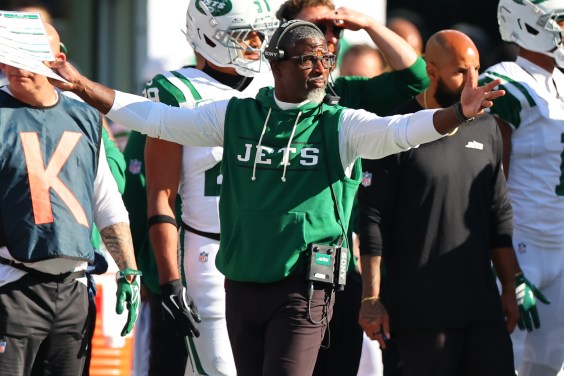
The Miami Dolphins certainly seemed ready to assume the lease from the New York Jets and take over operations at the NFL's failure factory. Roster in shambles due to years of mismanagement, vibes negative, expectations nonexistent, results consistently unwatchable, envisioning horrible new cellars where others only saw cement: The Dolphins were out-Jetsing the Jets in ways no one had dreamed possible. This is an impressive anti-achievement. The Jets, after all, have spent the better part of a decade as the devastating punchline to the joke, "So, what about the Jets?" And the Dolphins had beaten it all, spending $167 million of actual money on a quarterback they learned to hate within a year, firing everyone they could this past offseason, and losing their first five games this year without ever having had a lead at any point in any of them. They were the Jets with full parade-ground regalia, a team that could easily lose all 17 of its scheduled games and any extraneous scrimmages, and seemed earnestly to be trying to do so. But the only true Jets are the Jets themselves, and the Dolphins found that out by playing those Jets on Sunday. Lots of teams with low self-esteem learn that lesson, because the Jets are the clown car that never quite empties its contents. They haven't had a winning season in 10 years or a playoff appearance in 16, and under current coach Aaron Glenn they are 5-19. The Dolphins were supposed to be a get-well game for them, and, well, they got got.
-
The Crossword, Oct. 26: Putting Out Fires (Themeless)
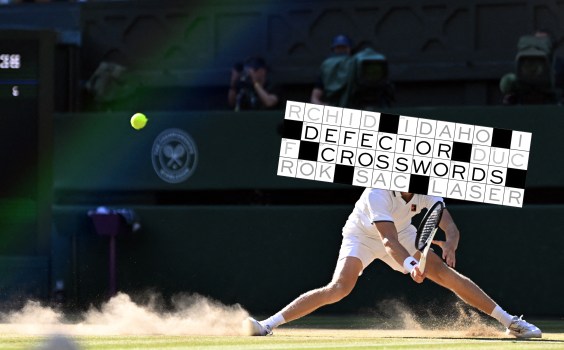
It's time to wrap up the month with a challenging themeless. Keep an eye out for tricky clues and fun wordplay. You can always count on our Monday crossword. This week's puzzle was constructed by Elijah Acquah, and edited by Hoang-Kim Vu. Defector crosswords, launched in partnership with our friends at AVCX, run every Monday. If you’re interested in submitting a puzzle to us, you can read our guidelines HERE.
-
Is Less Bad Still Good Enough?
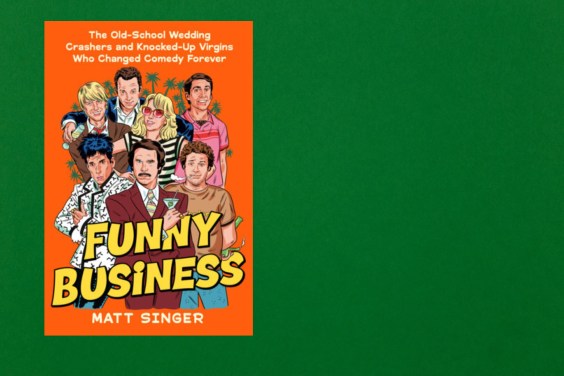
In the 1957 drama The Three Faces of Eve, Joanne Woodward plays a woman with a split personality. By day, she is Eve White, an uptight housewife with a whisper of a voice, but sometimes, White is overtaken by Eve Black, a good-time gal in that mid-century American strain. "Honey, there are a lot of things you've never seen me do before," she purrs at the doctor. "That's no sign I don't do 'em." The central tension of the film is both psychoanalytic and sociological, as Eve faces the Goldilocks problem of whether she should be a porridge that is too hot or too cold. Luckily for Eve, she discovers a new persona, Jane, who combines the extremes of both—the kind of woman you marry or you hire to teach elocution. It was The Three Faces of Eve, and not any of the "Frat Pack" comedies of the 2000s, that sprang to mind as I revisited 2003's Old School, a movie I hadn't seen since for a good 20 years and which, in light of recent news, did not hold up. Old School revolves around Mitch (Luke Wilson), a man who comes home to see his live-in girlfriend (Juliette Lewis) hosting an orgy. He moves to a house by a college campus, where his two friends, married father Beanie (Vince Vaughn) and newlywed Frank (Will Ferrell), convince him to start a fraternity.
-
Leave It To The Browns To Ruin The Post-Win Locker Room Video
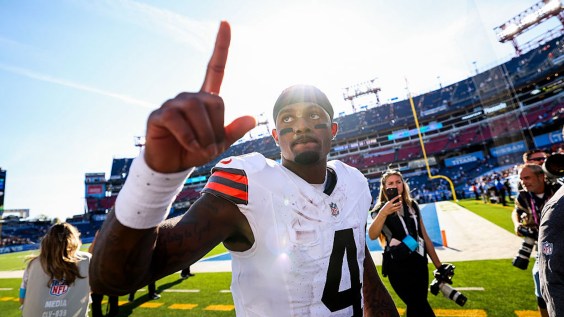
I love it when NFL teams post a video from inside a victorious locker room. I love to see Dan Campbell look down at his little stat sheet and shout, "O-line! Where's the O-line? One-hundred forty-four yards on the ground! Holy cow, men!" while losing his voice. I love it when a sheepish running back is given a game ball and asked to say something to the team, and all he can manage is, "Love y'all boys. Let's keep it going." I love when a doofy starting quarterback's voice cracks as he breaks down the huddle. I even love it when Ben Johnson rips his shirt off. So of course the Cleveland Browns, the most dispiriting and despicable 5-2 team in the league, have managed to suck all the juice out of the format. https://www.youtube.com/watch?v=JYej7wvFKvQ Our first big problem here is that Todd Monken is an absolute dud. He's carrying himself throughout this speech like he's condescending to a Home Depot employee. "I don't know how much we rushed for, but that looked like how we want it to look like." Excuse me? No, you idiot. Where is your stat sheet? You have to yell the yardage number so everyone can cheer. And what's this, you're telling me that you weren't sure if Denzel Ward was going to play, but then he did play, and of course you should have known that he was going to? Amazing story, coach, thank you.
-
Real Madrid Isn’t Dead Just Yet
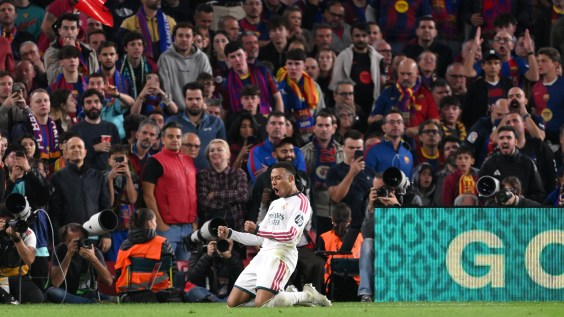
Perhaps the rumors of Real Madrid's demise were greatly exaggerated. It was easy to look at the club's ongoing war of the words with La Liga president Javier Tebas, as well as the two domestic losses that left the club six points behind Barcelona heading into Sunday's first Clásico of the season, and come to the conclusion that Real was a club searching for solid ground. However, it was apparently just as foolishly easy to forget that Real Madrid has a lot of good soccer players. Sunday's match, a tense affair that ended with a late Kylian Mbappé winner and a scoreline of 2-1 to the visitors from the Spanish capital, was a good reminder that Real Madrid is never dead until it is dead. https://www.youtube.com/watch?v=YQ7q4mq6jow Real is more than capable of beating Barcelona on any given Clásico. That doesn't make the ask any easier, but as Paris Saint-Germain showed midweek, Barcelona isn't unbeatable, and it's not a surprise that José Mourinho, one of the biggest tormentors of the blaugrana, figured out a way to negate Barcelona's strengths and prey on its weaknesses. Despite Barcelona's possession advantage (62 to 38 percent) and shot supremacy (18 to 10) on Sunday, and despite Mbappé's opener, which was as much lucky as good, this was a sturdy performance from Real Madrid, and one that could serve as a blueprint for how to attack Barcelona the rest of the season.
-
The Valkyries Believe In Second Chances
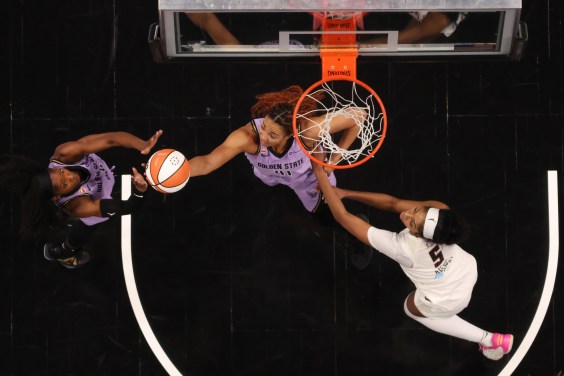
ATLANTA — The Golden State Valkyries’ most valuable player on Saturday afternoon finished with just four points, though by the standards of Kiah Stokes, that qualifies as a scoring outburst. A player with a zero-points-on-zero-field-goal-attempts-in-30-minutes performance to her name in these Finals, Stokes looked disconcertingly ready to fire in the first quarter of Game 4 in Atlanta, the Valkyries desperate after a pair of offensive disasters in Games 2 and 3. Usually when a pass finds Stokes wide open in the corner, you can practically hear a “wrong answer, try again!” buzzer sound as she swings it back to the top of the key. But when Veronica Burton drove the paint and kicked it out to Stokes a minute into the game, the center didn’t think twice about taking the shot. A miss in the end, yes, but a startling sight all the same. After the game, Stokes told reporters that her “aggression” in the form of five first-quarter field goal attempts wasn’t really part of the plan. She had no designs on being a hero, no illusions about what her offensive contribution in the game was going to be. “For me, if you shoot it, it’s a chance to get a rebound and another possession,” she said. In Golden State’s 67-62 series-tying win against the Atlanta Dream on Saturday, that’s basically what every field goal attempt felt like: a chance for more field goal attempts. The Valkyries pulled down 13 offensive rebounds, eight of them thanks to Stokes, and forced 18 Dream turnovers to get the possession math working in their favor again—a strength of theirs, usually, but a struggle in their last two games. The series returns to San Francisco for Game 5 on Monday before heading back to Atlanta for a Game 6 on Thursday.
-
Scapegoat Season Has Arrived For College Football
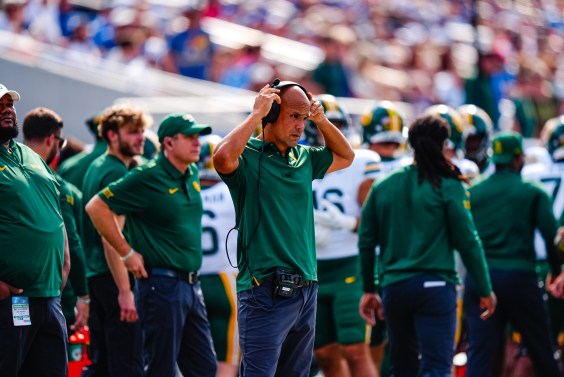
There are only three undefeated teams left in the top (as in moneyed) level of college football, which suggests that the word "elite" is being replaced by "last one standing." The middle shall hold because everyone is heading for it. This forms a tight braid with the other central truth about the sport, which is every fan base announcing loudly that someone must pay for their outsized expectations for teams who clearly don't deserve it. A year ago, this led to a flurry of coach firings that began in Week 3 (UCLA) and powered almost weekly into January. But all those contract settlements resulted in a new level of financial conservatism among athletic directors and other quarter-choking real estate speculators who decided that paying for people who don't work (fired coaches) is almost as bad as paying for people who do all the work (players). And "conservatism" in this case meant waiting an extra four weeks to start detaching heads from "head coaching."

CLICK HERE for National & World News
NowLoop.com
Nowloop delivers national and local news, sports, movies, weather, web cams, lottery results, horoscopes and more, Nowloop for you, your family and friends.
This national and local news and information website online newspaper is distributed in the hope that it will be useful for entertainment, but WITHOUT ANY WARRANTY; without even the implied warranty of MERCHANTABILITY or FITNESS FOR A PARTICULAR PURPOSE. Both the author and the website provider assume no liability for damages arising from use of the news or information found on this website or linked to websites.
Slangs and common mis-spellings for NowLoop.com may include nowlop, nowllop, nowlooop, nowop, noloop, nollop, nowoop and now loop.